01
KNOWLEDGE
Traditional knowledge, ethnobotanical records and scientific literature contain generations of biological observation.
Earth's most biodiverse ecosystems contain extraordinary biological knowledge. Kunova is building the intelligence infrastructure to connect traditional knowledge, scientific evidence, genomics and environmental context — while preserving provenance, uncertainty and the scientific boundaries between them.
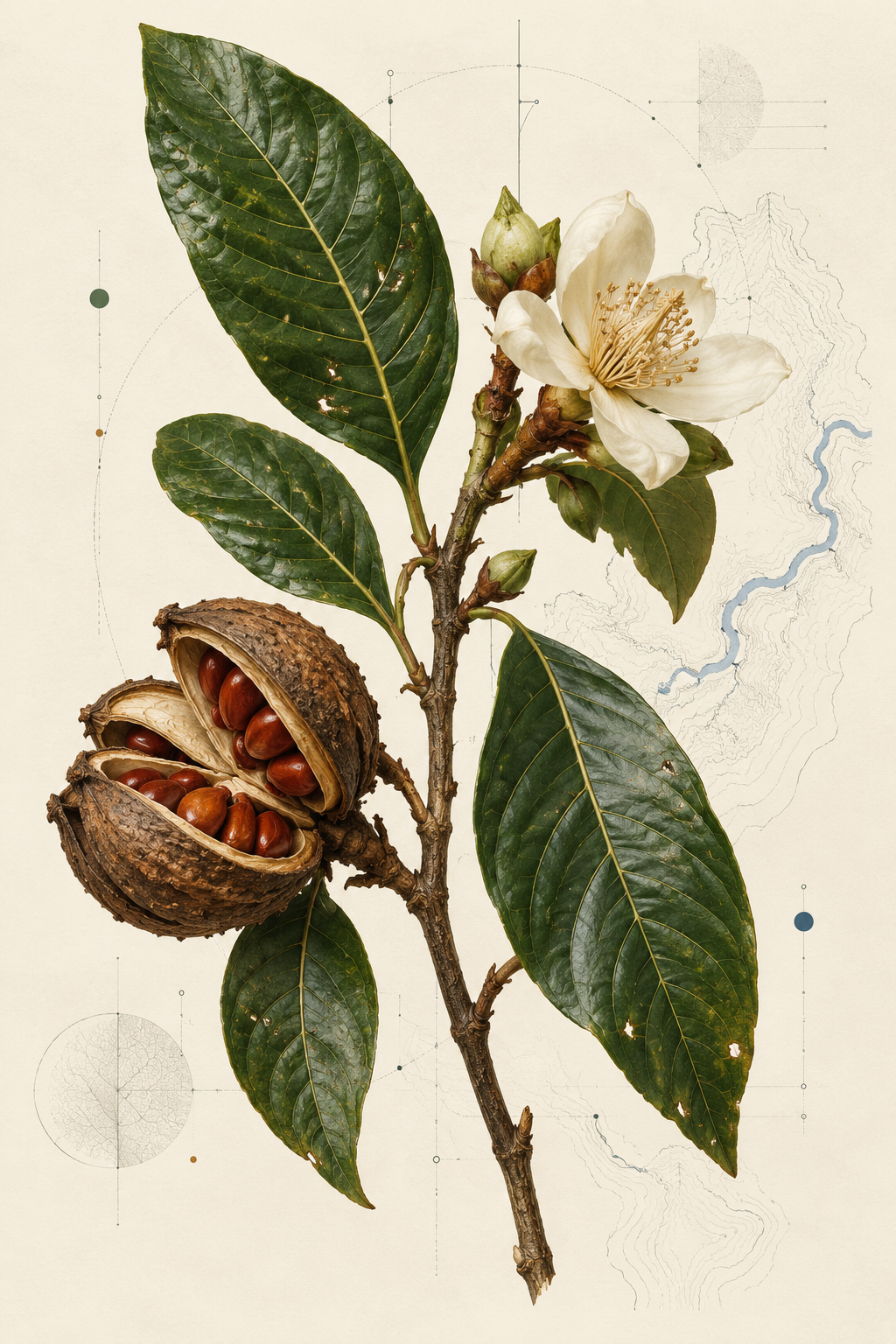
Some of the world's richest biological regions are also among the hardest to understand computationally. Their knowledge exists across sources created for different purposes, with different structures and vocabularies.
The opportunity is to connect what is already known — and combine it with new biological evidence.
Kunova is designed to connect evidence. Explore the network to see how distinct sources can form a traceable view of a biological resource.
Interactive view of the Kunova evidence architecture
Select a node to explore its role, or trace one of the connections below.
These are illustrative routes through Kunova's evidence architecture. Relationships retain their source, evidence type and level of confidence so that connections remain inspectable rather than becoming unsupported conclusions.
Traditional knowledge, ethnobotanical records and scientific literature contain generations of biological observation.
Taxonomy, biological identity and molecular evidence provide additional ways to characterize biological resources.
Climate, terrain, hydrology, vegetation, soils and Earth observation describe environmental setting.
Knowledge graphs and AI can connect evidence that normally resides in separate systems.
Connected evidence can reveal questions and candidates worthy of deeper scientific investigation.
Kunova generates structured intelligence and research hypotheses. Scientific validation remains essential.
Kunova began by transforming fragmented ethnobotanical literature into structured, traceable biological evidence. That foundation is now being connected with genomic, scientific and environmental evidence without collapsing the distinctions between them.
The objective is not simply to accumulate data. Each observation should remain connected to its source, biological identity and analytical history so that evidence can be inspected, compared and extended as new scientific layers are introduced.
Literature and traditional knowledge provide one layer of evidence. Genomic characterization provides another — independently generated and computationally testable.
Kunova is now applying this architecture to real genomic data. In our first Coffee study, more than 53,000 predicted proteins were processed through complementary functional annotation methods, creating traceable evidence across protein domains, orthology and biological function.
These computational relationships generate evidence and research hypotheses. They do not by themselves establish biological activity, expression, metabolite production, phenotype, efficacy or validation of traditional use.
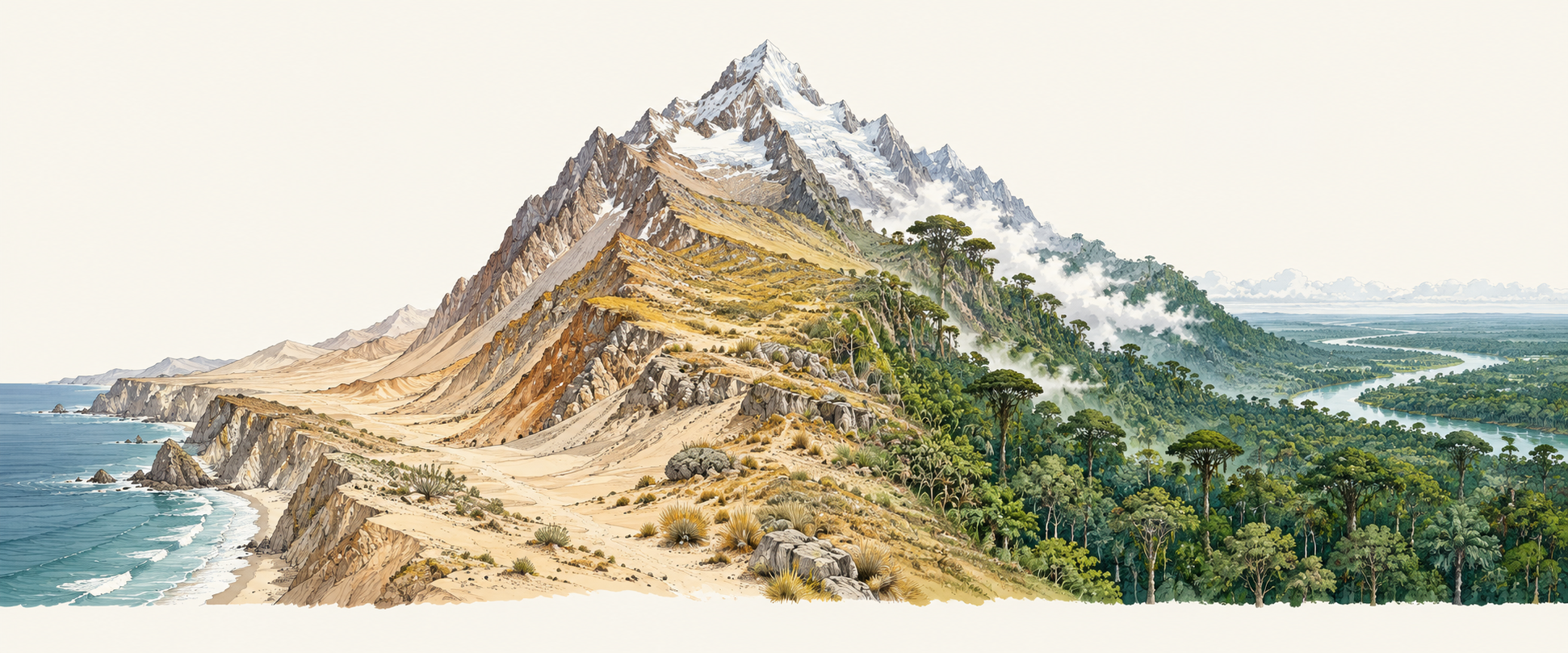
Biological observations occur within environmental systems.
Connecting records to temperature, precipitation, humidity, terrain, hydrology, soils, vegetation, forest structure, land cover and Earth observation may help researchers explore how observations vary across geography and environmental conditions.
Context for exploration and hypothesis generation; it does not establish causation.
Understanding where knowledge comes from matters as much as understanding what it says.
Kunova treats provenance as part of the evidence itself. Sources, biological identity, geography and analytical transformations are retained so that results can be inspected, reproduced and challenged.
Responsible access is part of the same architecture. Access and Benefit Sharing, Nagoya Protocol principles, permissions and benefit-sharing considerations can be associated with biological resources and their evidence as discovery progresses.
Traceability supports responsible scientific and research practice. It does not itself establish legal compliance or determine access and benefit-sharing obligations.
Literature
Repositories
Biological databases
Genomic data
Environmental observations
Extraction
Normalization
Identity resolution
Provenance
Knowledge graphs
Geospatial intelligence
Genomic relationships
Environmental context
Search
Relationships
Evidence
Research hypotheses
Scientific investigation
Laboratory work
Institutional collaboration
Kunova's ambition requires collaboration across disciplines.
We are interested in conversations with researchers, universities, biodiversity institutions, technology partners and organizations exploring responsible biological discovery.
Talk to KunovaKunova began with a simple observation: some of the world's richest biological knowledge exists in places where the evidence needed to understand it remains fragmented.
The initial focus is Peru and the Amazon–Andes region. The architecture is being developed with a broader ambition: reusable intelligence infrastructure capable of connecting biodiversity evidence across ecosystems and geographies.
Which species share biological relationships?
Where does traditional knowledge intersect with modern scientific evidence?
How does biological variation relate to environment?
Which relationships deserve further investigation?
What knowledge remains disconnected?